Leading the way in nature policy? Monitor the GBDA
Everyone likes a fresh baseline measurement. A nice report with figures, charts and tables provides guidance. But honest: measuring once says as much as one

Everyone likes a fresh baseline measurement. A nice report with figures, charts and tables provides guidance. But honest: measuring once says as much as one

Many Dutch municipalities unknowingly miss out on substantial amounts of WOZ revenue. The cause? Missing or overdue registrations in the BAG (Basic Registration of Addresses and Buildings) and BGT

Everyone wants insight into trees. Municipalities want to monitor for greening, grid operators want to minimise risks, and policymakers seek rationale for climate measures. But insight is only valuable

Voor schadeverzekeraars draait alles om risicobeheersing. Zeker bij vastgoed. Hoe scherper je zicht op de werkelijkheid, hoe beter je risico’s kunt minimaliseren in je verzekerde

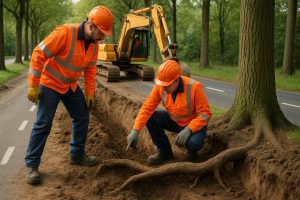
Wortelrisico’s zijn vaak een onzichtbare factor bij bouw- en graafwerkzaamheden. Toch kunnen ze voor flinke problemen zorgen als ze niet vroegtijdig in kaart worden gebracht.

Every municipality in the Netherlands has one major challenge with regard to energy transition: getting a view of where we are and where we want to go. As time passes, the pressure grows to achieve sustainable goals and prepare the local community for a future without fossil fuels.
But how do you maintain an overview and implement data-driven policies around solar energy?

The agriculture sector is on the brink of a technological revolution, where satellite data and advanced AI systems are key to more sustainable and efficient land management. Discover how NEO, as a pioneer in agricultural monitoring, together with its partners, is shaping the future with pioneering innovations within the Area Monitoring System (AMS).

Traditionally, calculations around urban green space are done by counting the number of trees. That method has major limitations, as the amount of green space varies per tree. Therefore, there is a growing desire to switch to counts based on crown volume. This will provide a better picture of green space in the city, which will benefit all follow-up analyses for climate, liveability, etc.

Traditionally, calculations around urban green space are done by counting the number of trees. That method has major limitations, as the amount of green space varies per tree. Therefore, there is a growing desire to switch to counts based on crown volume. This will provide a better picture of green space in the city, which will benefit all follow-up analyses for climate, liveability, etc.

For Gasunie, NEO performs updates for analyses of the depth location of the Gasunie pipeline network of approximately 14,000 km. At a glance, it provides an overview of situations where the height of the ground level (and thus the depth of the pipelines) has changed. With these updates, the safe location of the pipeline network is even better guaranteed.Thanks to advanced Deep Learning techniques, the API now provides access to a larger number of buildings than listed in the Basic Registration of Addresses and Buildings (BAG). This means you can access not only main buildings, but also annexes and detailed properties of these buildings. Moreover, the API can now combine roof type information with actual building data, allowing you to make accurate calculations of the number of solar panels and remaining solar potential.